Memory Model and Allocation
Understanding how C++ programs use memory is fundamental to writing efficient, safe code. Memory is divided into distinct regions with different characteristics and management strategies.
The memory model defines how programs interact with memory - regions, lifetimes, and allocation strategies. Master this to understand pointers, object lifetime, and performance.
Memory Regions
Every C++ program's memory is organized into distinct regions, each serving a specific purpose.
Complete Address Space Layout
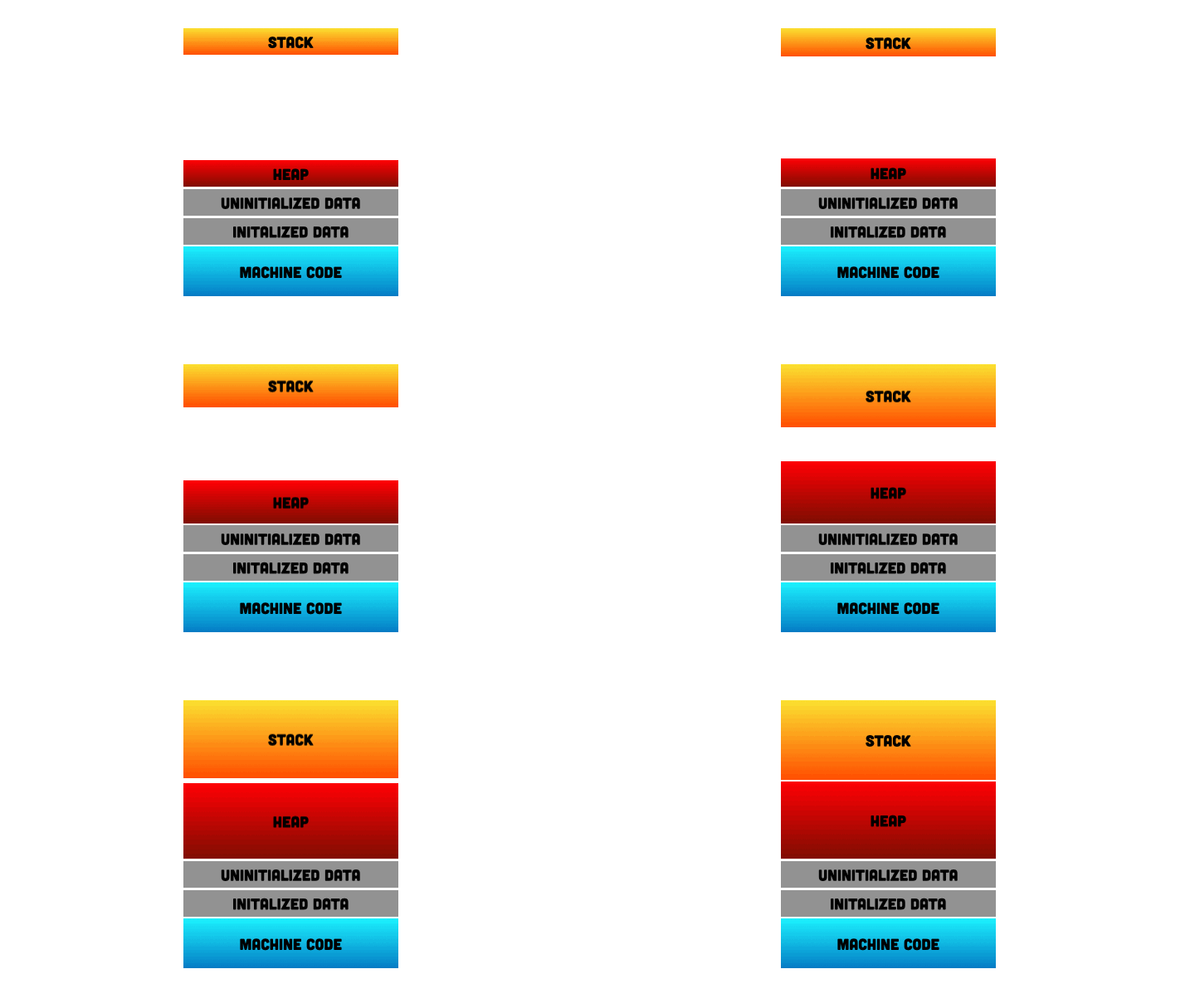
High Address
┌─────────────────┐
│ Stack           │ ↓ Grows downward
│ (automatic)     │   ~1-8 MB
│                 │
├─────────────────┤
│ (unmapped)      │
├─────────────────┤
│ Heap            │ ↑ Grows upward
│ (dynamic)       │   Large (GBs)
│                 │
├─────────────────┤
│ .bss            │ Uninitialized globals
│ (zero-init)     │
├─────────────────┤
│ .data           │ Initialized globals/static
├─────────────────┤
│ .rodata         │ Read-only data (string literals)
├─────────────────┤
│ .text           │ Executable instructions
└─────────────────┘
Low Address
Code/Text Segment
Contains executable machine instructions. Read-only, shared between processes.
void function() {  // Code stored in .text segment
    int x = 42;    // Instructions here
}

// Properties:
// - Read-only (attempting to modify causes crash)
// - Shared (multiple instances share same code)
// - Fixed size (determined at compile time)
Data Segment
Initialized data (.data):
int global = 42;              // .data segment
static int fileStatic = 100;  // .data segment
const char* str = "hello";    // Pointer in .data, string in .rodata

// Properties:
// - Initialized at program start
// - Writable (unless const)
// - Program lifetime
Uninitialized data (.bss):
int globalUninit;             // .bss segment
static int fileStaticUninit;  // .bss segment

// Properties:
// - Zero-initialized at program start
// - Doesn't take space in executable
// - Allocated at runtime
Stack Memory
Automatic storage for local variables. Fast, limited, LIFO (Last In, First Out).
void function() {
    int local = 10;        // Stack allocation
    char buffer[100];      // Stack array
    Widget w;              // Stack object (constructor called)
}  // All destroyed automatically when function returns
Stack characteristics:
- Speed: Extremely fast (~1 ns allocation)
- Size: Limited (typically 1-8 MB)
- Lifetime: Scope-based (automatic cleanup)
- Management: Automatic (RAII)
- Allocation: pointer bump
- Deallocation: pointer bump
- Fragmentation: None
- Thread-safety: Each thread has its own stack
How stack works:
Stack frame for function():
High Address
├─────────────┐
│   local=10  │ ← Stack pointer (SP)
├─────────────┤
│  buffer[0]  │
│  buffer[1]  │
│     ...     │
│ buffer[99]  │
├─────────────┤
│   Widget w  │
├─────────────┤
│   (free)    │
Low Address

// When function returns, SP moves up, deallocating everything
Heap Memory
Dynamic memory for runtime allocations. Flexible, large, manually managed.
void function() {
    int* ptr = new int(42);        // Heap allocation
    char* buffer = new char[1024]; // Heap array
    Widget* w = new Widget();      // Heap object

    // Must manually clean up
    delete ptr;
    delete[] buffer;
    delete w;
}
Heap characteristics:
- Speed: Slower (~50-100 ns allocation)
- Size: Large (gigabytes available)
- Lifetime: Explicit (new/delete)
- Management: Manual
- Allocation: to depending on allocator
- Deallocation: Complex (coalescing, free lists)
- Fragmentation: Possible
- Thread-safety: Requires synchronization
How heap works:
Memory allocator maintains free lists:

Free blocks:
[16 bytes] → [32 bytes] → [1024 bytes] → ...

Allocation:
1. Find suitable block (best-fit, first-fit, etc.)
2. Split if too large
3. Return pointer

Deallocation:
1. Mark block as free
2. Coalesce with adjacent free blocks
Stack vs Heap Comparison
| Aspect | Stack | Heap |
|---|---|---|
| Speed | Very fast (~1 ns) | Slower (~50-100 ns) |
| Size | Limited (1-8 MB) | Large (GBs) |
| Lifetime | Automatic (scope) | Manual (new/delete) |
| Allocation | , trivial | to |
| Deallocation | , automatic | Manual, can leak |
| Fragmentation | None | Possible |
| Cache locality | Excellent | Variable |
| Thread-safe | Per-thread | Requires sync |
| Overflow | Stack overflow crash | Returns nullptr or throws |
When to Use Each
Use Stack When:
// Small objects
int x = 42;
std::array<int, 100> arr;

// Scope-limited lifetime
{
    Widget w;
}  // Destroyed automatically

// Performance-critical code
void hotPath() {
    int temp[16];  // Stack is faster
    process(temp);
}

// RAII objects
std::lock_guard<std::mutex> lock(mtx);  // Automatic unlock
Use Heap When:
// Large objects (exceed stack size)
int* huge = new int[1000000];  // 4 MB

// Runtime-determined size
int* arr = new int[userInput];

// Lifetime beyond scope
Widget* create() {
    return new Widget();  // Outlives function
}

// Polymorphism
Base* ptr = new Derived();  // Dynamic type

// Shared ownership
std::shared_ptr<Resource> shared = std::make_shared<Resource>();
Performance Impact
// Benchmark: 1 million allocations

// Stack: ~1ms total (~1 ns each)
void stackBenchmark() {
    for (int i = 0; i < 1000000; ++i) {
        int arr[10];  // Nearly free
    }
}

// Heap: ~50-100ms total (~50-100 ns each)
void heapBenchmark() {
    for (int i = 0; i < 1000000; ++i) {
        int* arr = new int[10];
        delete[] arr;
    }
}

// Stack is 50-100x faster!
Common Issues
Stack Overflow
// Stack overflow causes
void recursiveBomb() {
    recursiveBomb();  // Infinite recursion
}

void largeLocals() {
    int huge[1000000];  // 4 MB, exceeds typical stack
}

void deepNesting() {
    int arr[10000];     // 40 KB
    anotherFunction();  // Each call adds to stack
}
Solutions:
# Check stack size
ulimit -s  # Linux

# Increase stack size (temporary)
ulimit -s unlimited

# Compile with stack protection
g++ -fstack-protector-all program.cpp
Heap Fragmentation
// Fragmentation example
char* a = new char[100];  // [100]
char* b = new char[100];  // [100][100]
delete a;                 // [free:100][100]

// Can't fit 150-byte allocation in 100-byte hole
char* c = new char[150];  // Allocated elsewhere
// Heap: [free:100][used:100][used:150 elsewhere]
Memory Leaks
// Leak
void leak() {
    int* ptr = new int(42);
    // Never deleted!
}

// RAII solution
void noLeak() {
    std::unique_ptr<int> ptr = std::make_unique<int>(42);
    // Automatically deleted
}

// Smart pointer for arrays
void arraySafe() {
    std::vector<int> vec(1000);  // Manages heap internally
    // Automatic cleanup
}
Object Representation
Every object has four key properties:
int x = 42;

// 1. Type: int
// 2. Size: sizeof(x) = 4 bytes (typical)
// 3. Address: &x = 0x7fff1234 (example)
// 4. Value: x = 42
// 5. Lifetime: Until scope ends (stack) or delete (heap)
Memory Alignment
Objects must be aligned to boundaries for CPU efficiency.
struct Example {
    char c;      // 1 byte, offset 0
    // 3 bytes padding
    int i;       // 4 bytes, offset 4 (aligned to 4)
    char c2;     // 1 byte, offset 8
    // 3 bytes padding
};  // Total: 12 bytes (not 6!)

sizeof(Example);   // 12 bytes
alignof(Example);  // 4 (from int)
Alignment requirements:
char: 1-byteshort: 2-byteint: 4-bytedouble: 8-byte- Pointers: 4 or 8 bytes (platform-dependent)
Storage Duration
Automatic Storage (Stack)
void function() {
    int x = 42;  // Created on entry, destroyed on exit
}
Static Storage
int global = 10;              // Program lifetime
static int fileScope = 20;    // Program lifetime

void function() {
    static int functionScope = 30;  // Program lifetime, initialized once
}
Dynamic Storage (Heap)
int* ptr = new int(42);  // Lives until delete
delete ptr;
Thread Storage (C++11)
thread_local int tlsVar = 0; // Per-thread lifetime
Best Practices
- Default to stack for local variables
- Use smart pointers for heap (unique_ptr, shared_ptr)
- Prefer std::vector over new[] for dynamic arrays
- Use std::string over char* for strings
- Profile before optimizing memory usage
- Don't put large arrays on stack (causes overflow)
- Don't forget to delete heap allocations
- Don't use new/delete when stack works
- Don't assume heap is always bad (sometimes necessary)
- Don't mix new/delete with malloc/free
Summary
Memory regions:
- Code (.text) - executable instructions, read-only
- Data (.data/.bss) - global/static variables
- Stack - automatic variables, fast, limited
- Heap - dynamic allocations, flexible, manual
Stack advantages:
- Extremely fast (~1 ns allocation)
- Automatic cleanup (RAII)
- Excellent cache locality
- No fragmentation
- No memory leaks possible
Heap advantages:
- Large size (gigabytes)
- Runtime-determined sizes
- Lifetime beyond scope
- Shared ownership
Decision guide:
// Stack (default choice)
int x = 42;
Widget w;
std::array<int, 100> arr;

// Heap (when needed)
std::vector<int> dynamicArr;            // Dynamic size
std::unique_ptr<Widget> ptr;            // Outlives scope
std::shared_ptr<Resource> shared;       // Multiple owners
new Widget();                           // Polymorphism (but use smart ptr!)
Golden rule: Use stack unless you have a specific reason for heap. When using heap, prefer smart pointers and RAII wrappers over raw new/delete.